The Cstrider Story

Reclaim
the Waterways

The water is the shortcut. This is the story of a smart, silent, emission-free ferry, and the cities it reconnects.

Begin the journey
01

Chapter One

The Gap

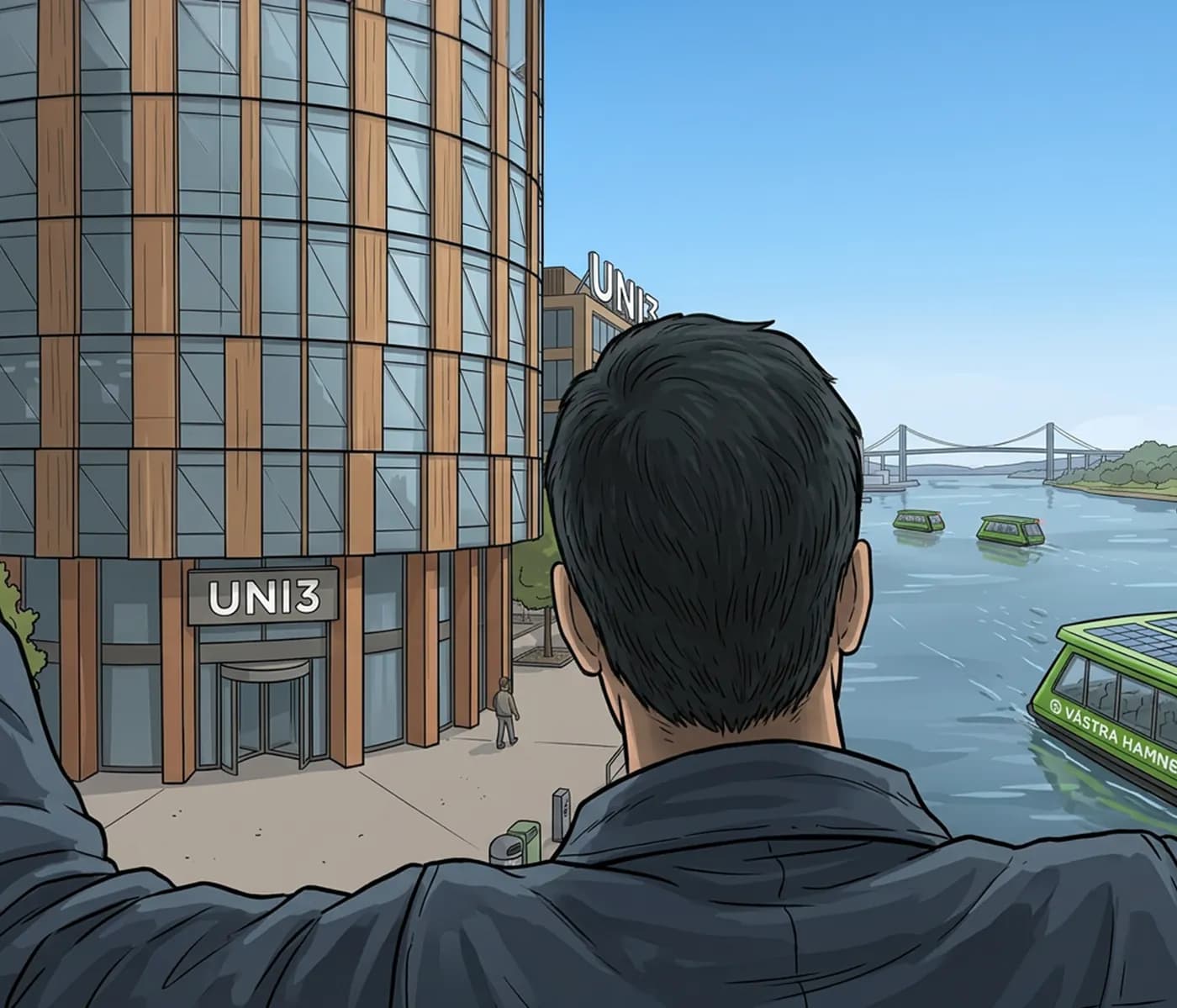
In 1890, the roddarmadamer rowed commuters across Göta Älv. Then cities turned their backs on the water. Bridges got longer, detours got slower, and the waterways, the original streets, fell silent.

Today a crossing of 300 metres can mean a detour of 10 kilometres. The gap in urban mobility is real. But the water is still there, waiting.

Don't just bridge the gap. Glide over it.

02

Chapter Two

The Virtual Bridge

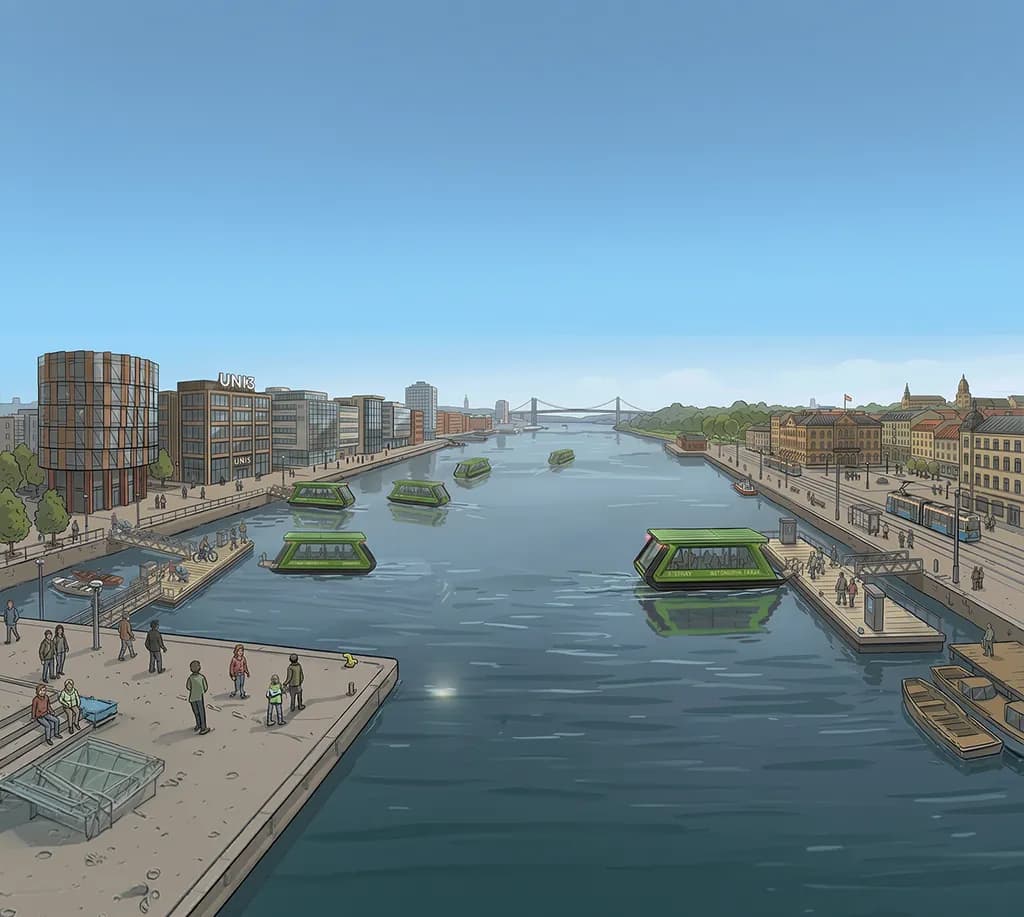
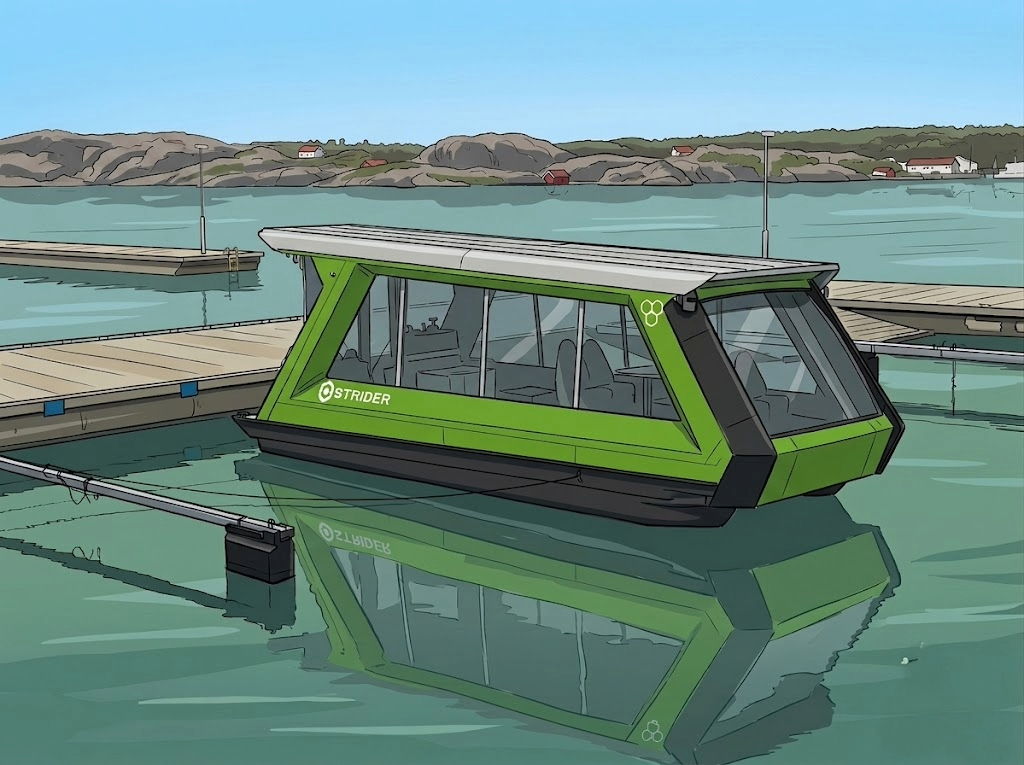
Cstrider transforms underutilized waterways into dynamic transport networks, a scalable system of autonomous electric ferries that connect neighborhoods at a fraction of the cost of traditional infrastructure.

95%
Less energy

Lightweight design and electric propulsion cut energy use by up to 95% versus alternative travel modes.

0
CO2 Emissions

Silent, climate-smart, zero-exhaust gas, supporting the EU goal of cutting transport emissions 90% by 2050.

<1.5%
Of a bridge cost

A fraction of the CAPEX of bridges or tunnels, and less than half the cost of larger electric ferries.

Autonomous ready

Equipped for autonomous operations: future-proof, safe, efficient.

Infrastructure that adapts

Start with a pilot, scale the fleet to match demand. No heavy construction.

The blue highway

Your street. Just wetter. New shortcuts on existing waterways.

Seamless city. Limitless water.

03

Chapter Three

Onboard

Red Dot Award Product Design 2025 Winner

Red Dot Award 2025

Design Excellence, Certified

Winner of the Red Dot Design Award, Cstrider turns the daily commute into a quality experience.

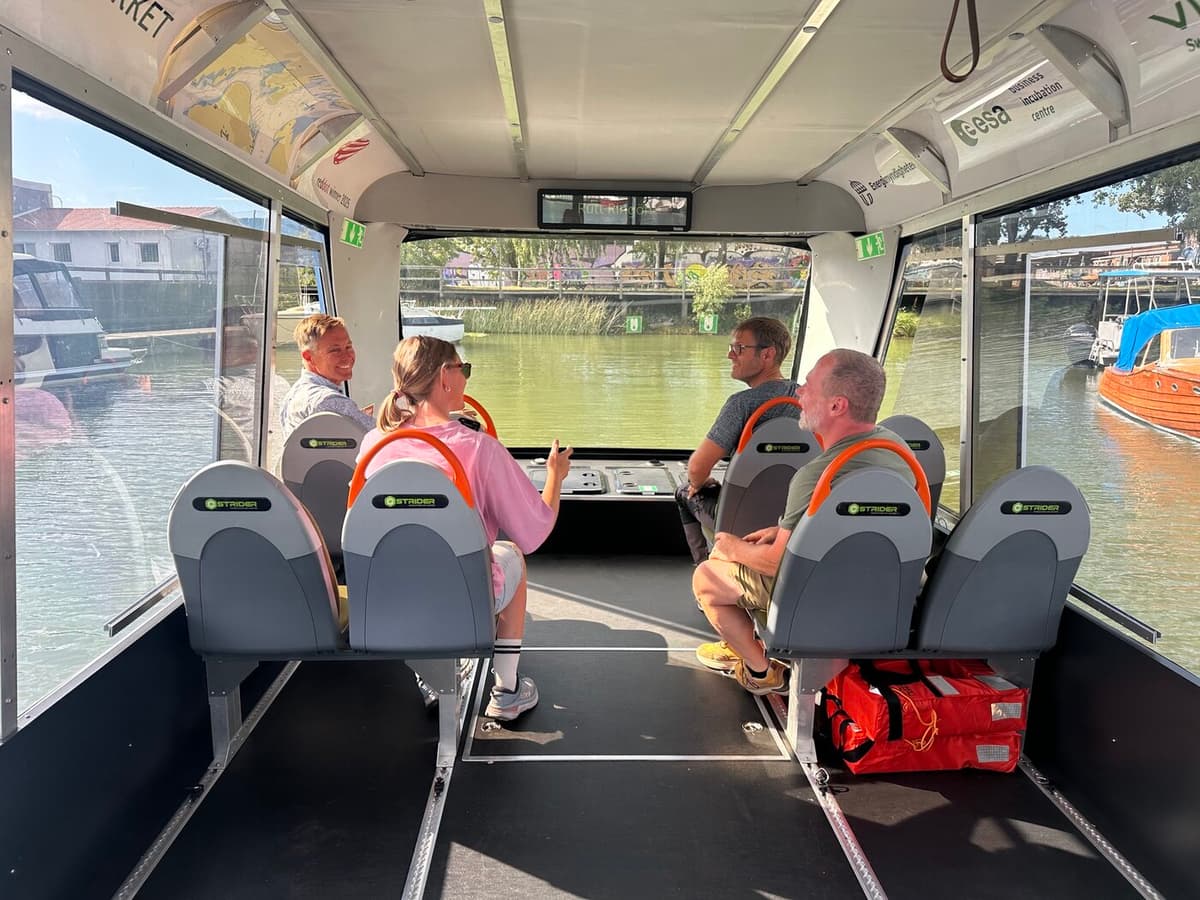
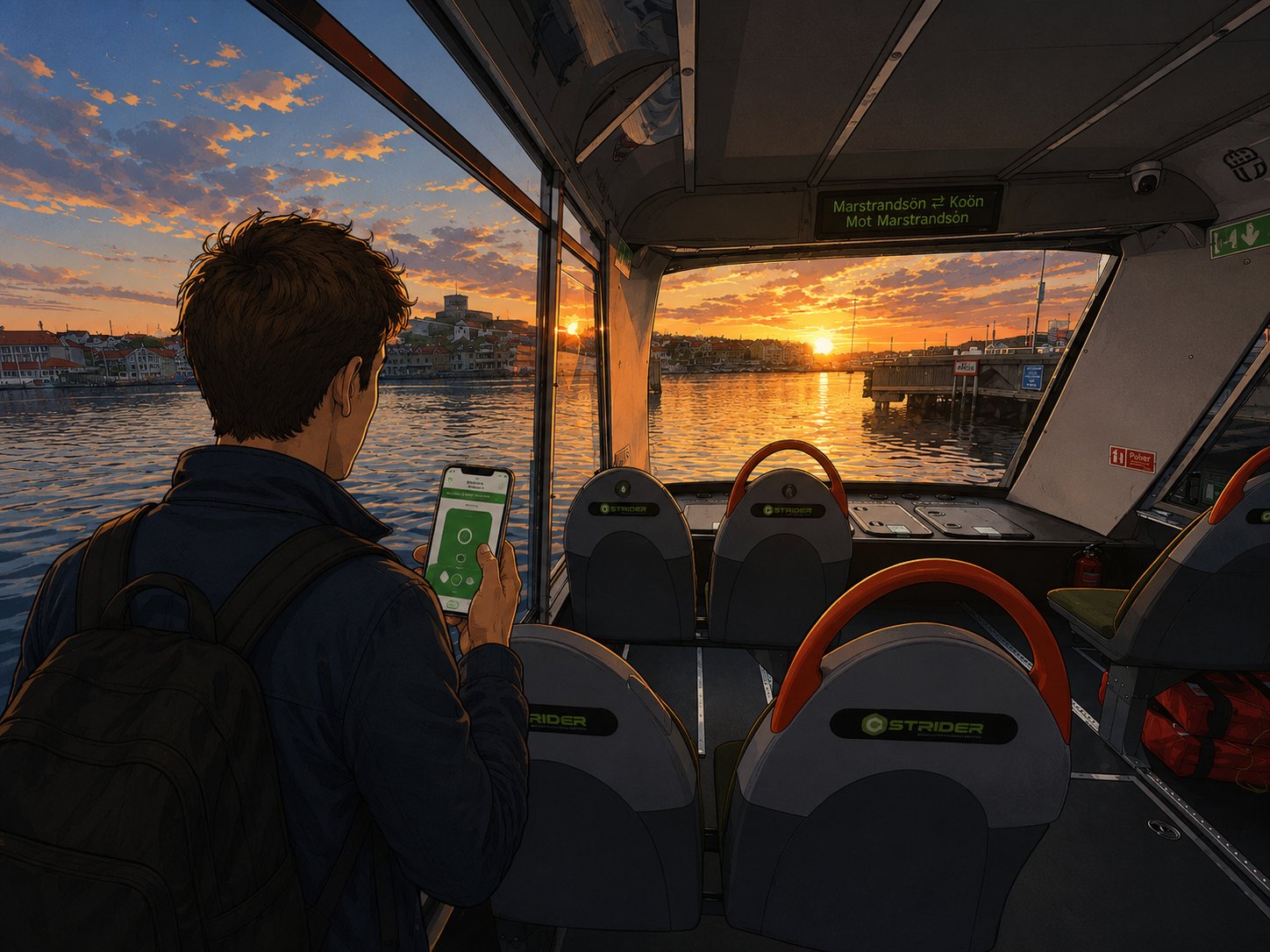
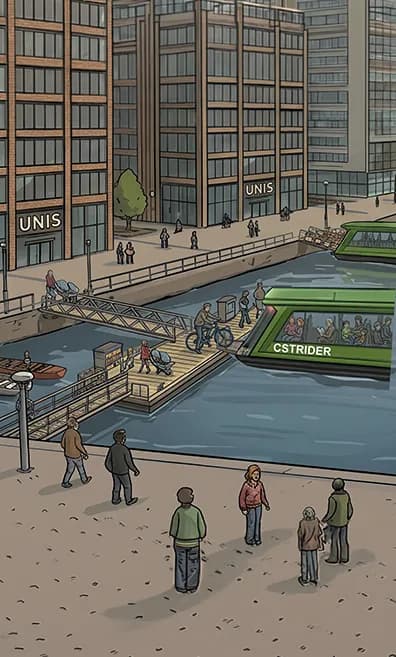
Large panoramic windows connect passengers with the water and the city views. The spacious, modular interior welcomes everyone, including bikes, prams and wheelchairs. Stress-free, silent, and designed with Scandinavian precision.

Turning the commute into the best part of the day.
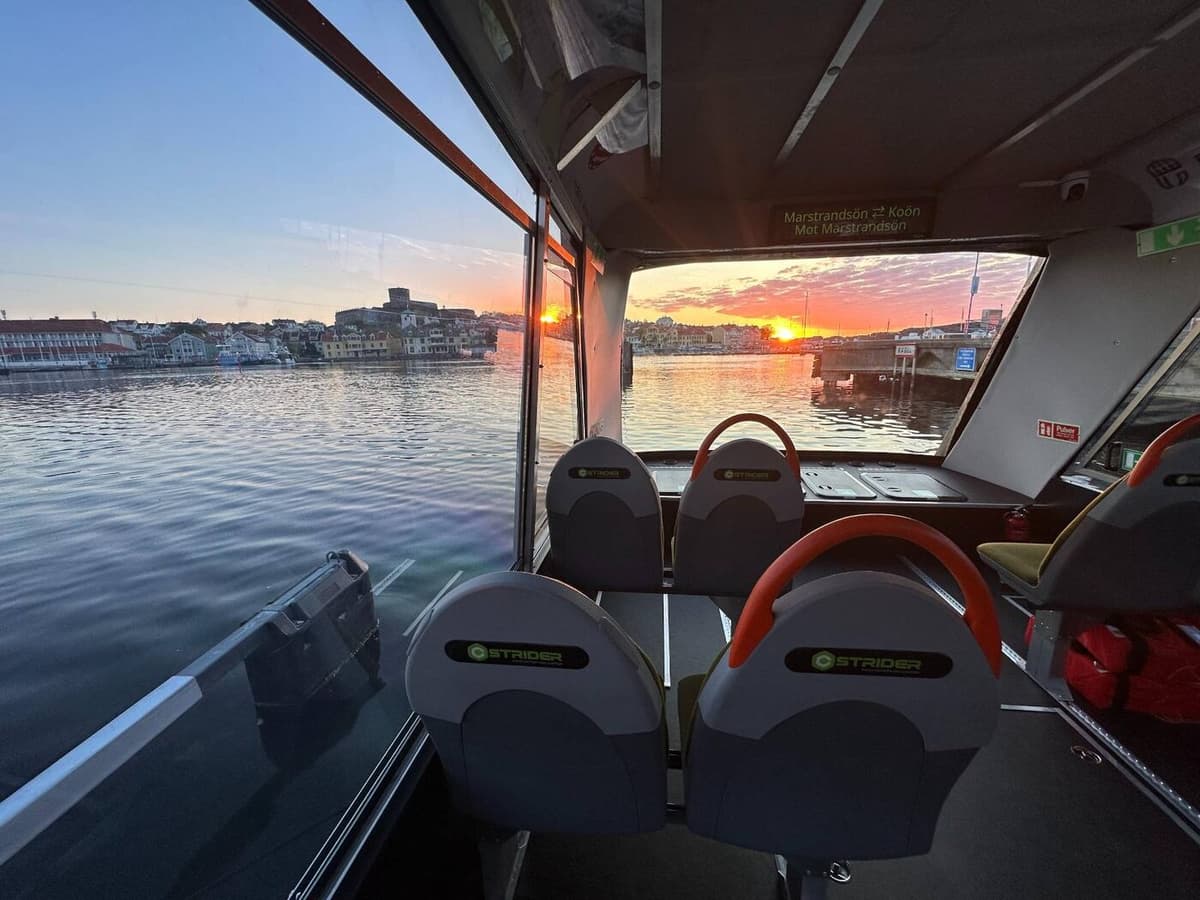
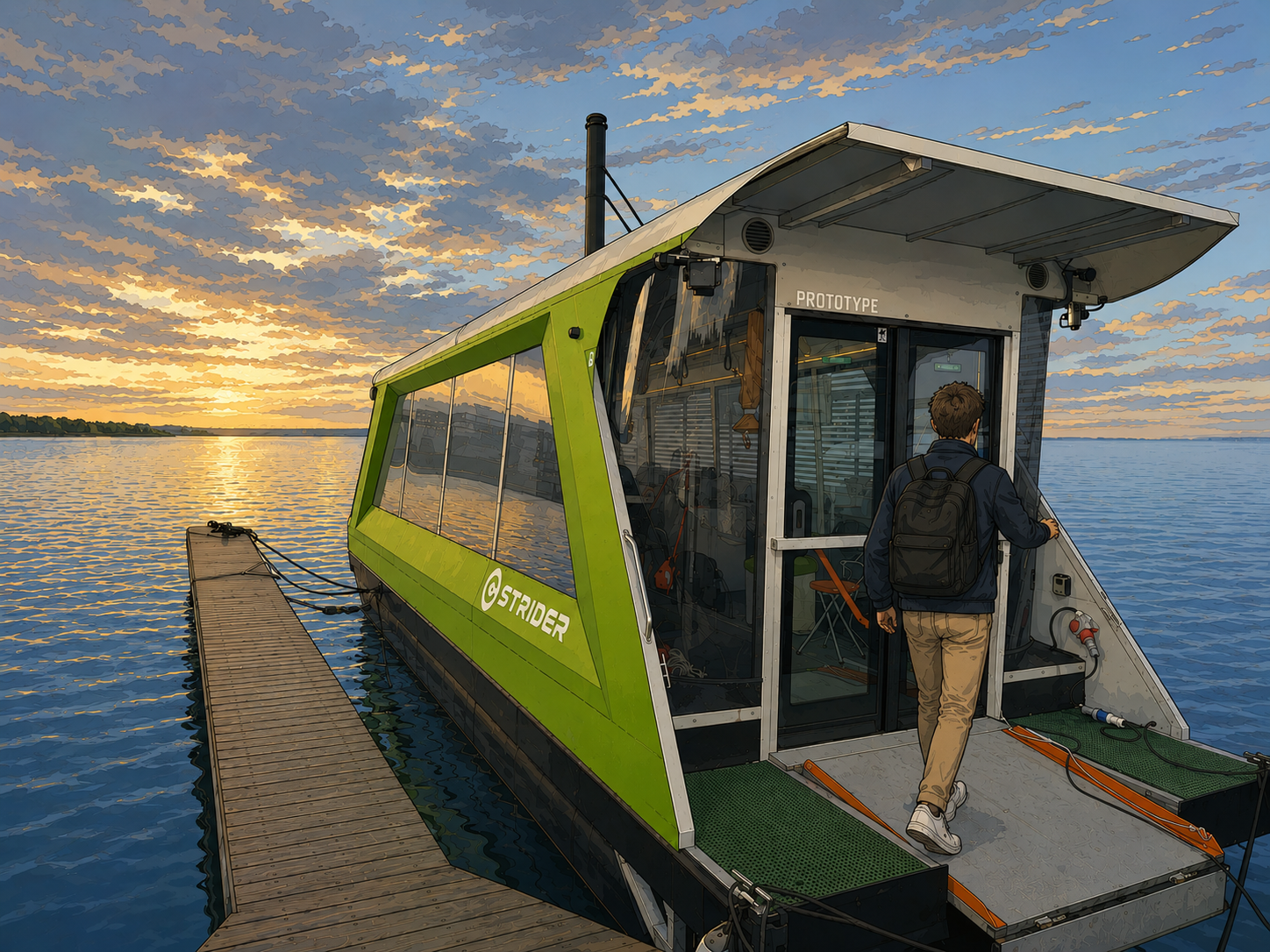
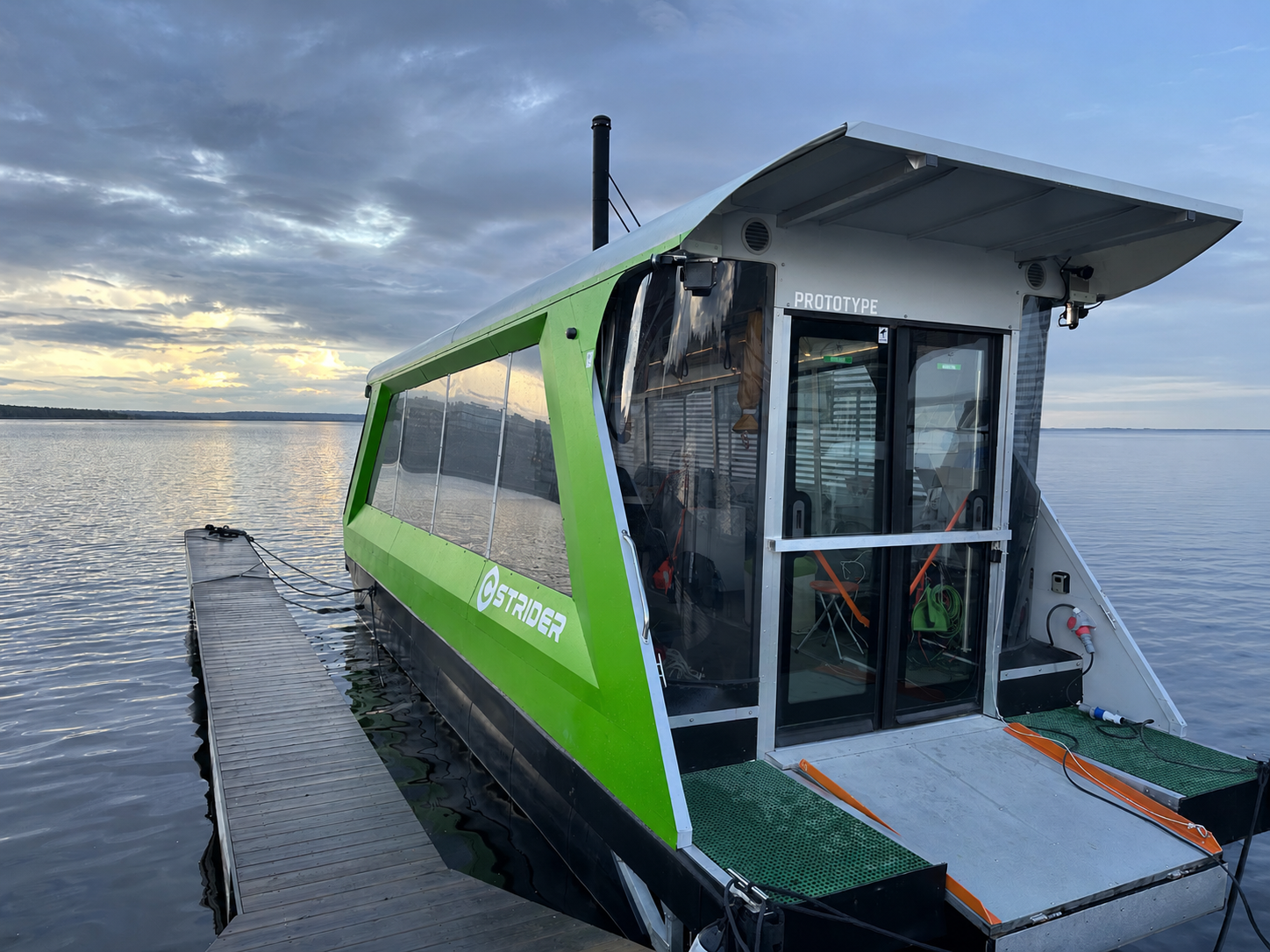
Cstrider at sunset in Marstrand
Cstrider seats
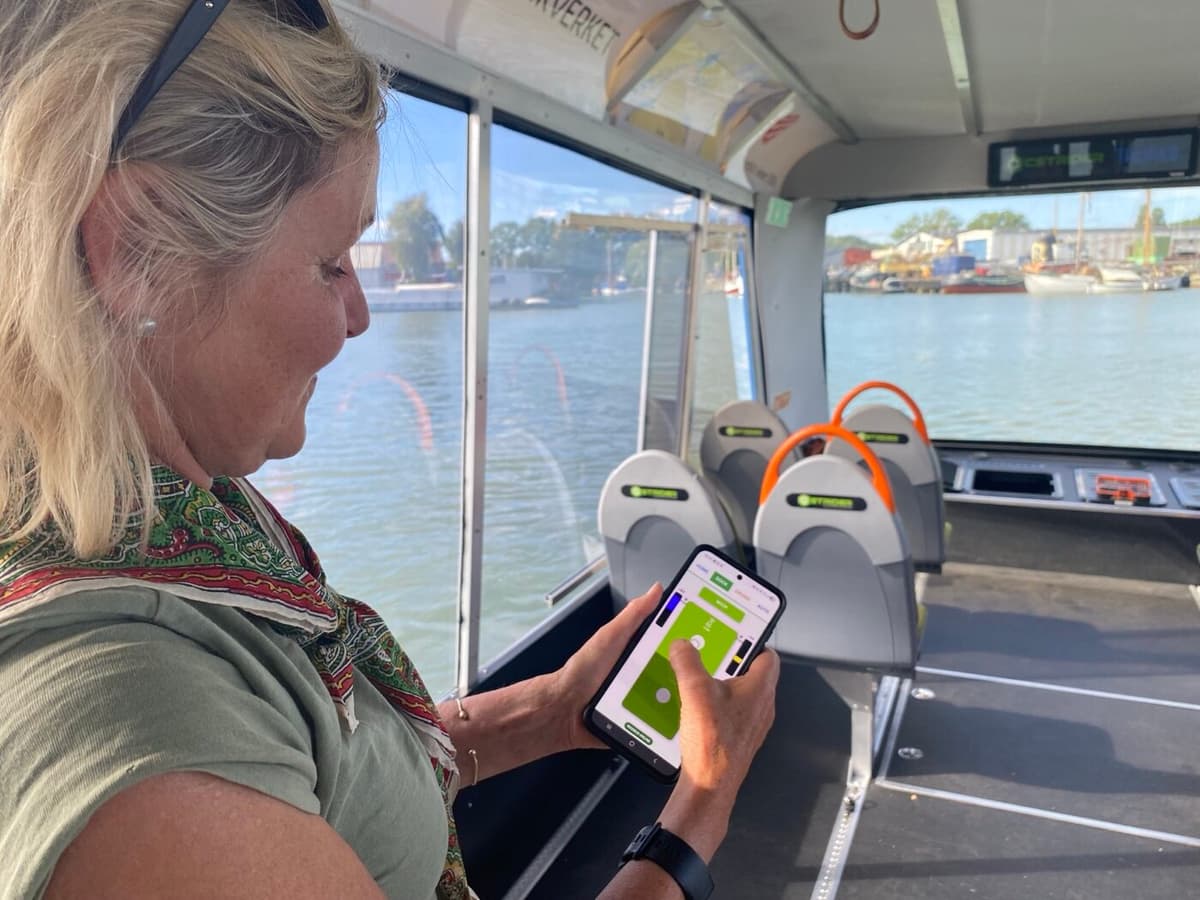
Steering Cstrider via the app
04

Chapter Four

The Journey

The Cstrider system is not only ideal for municipalities seeking cost-effective public transit, but also a game-changer for property developers and real estate investors looking to unlock valuable waterfront locations. Here is a practical user case: Unlock with the app. Press cast off. The autopilot handles the route, the docking, the charging. You just enjoy the ride, told panel by panel below. Click View as story to step through the journey one frame at a time.
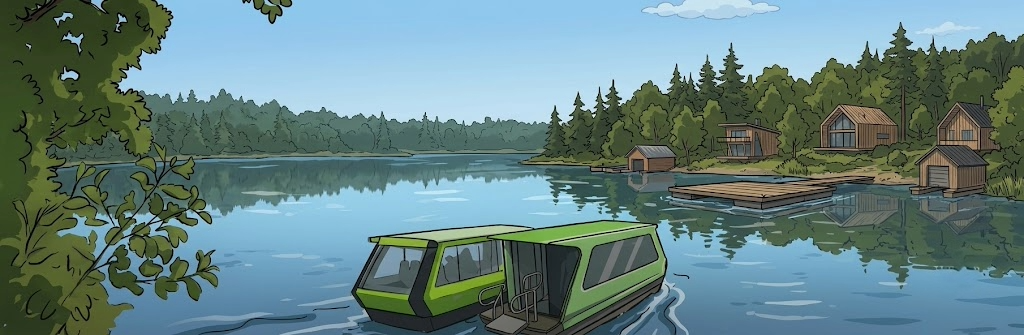

Två Cstrider-färjor passerar vid Tjörnbron
User Scenarios · Storyboard

Self-driving ferry on water

Two electric Cstrider ferries connect the mainland and an island. Here's what the journey looks like, from power cord to cabin doorstep, told frame by frame.
Zero-emissionAutonomous navigationApp-controlled
01
Self-driving ferry
Person on board
Possible soon · Ship’s Officer Class VIII or Swedish Transport Agency familiarization training required
1
Cstrider at the stop
I want to get to the island!
StartI'm standing at the stop on the mainland and want to get home. The area's two ferries are moored: one on the mainland, where I stand, and one on the island.
2
Green Cstrider seen from behind at the dock
UNPLUG!
Celia 1●Charging disconnected
Step 1I unplug the power cord from the ferry at the dock.
3
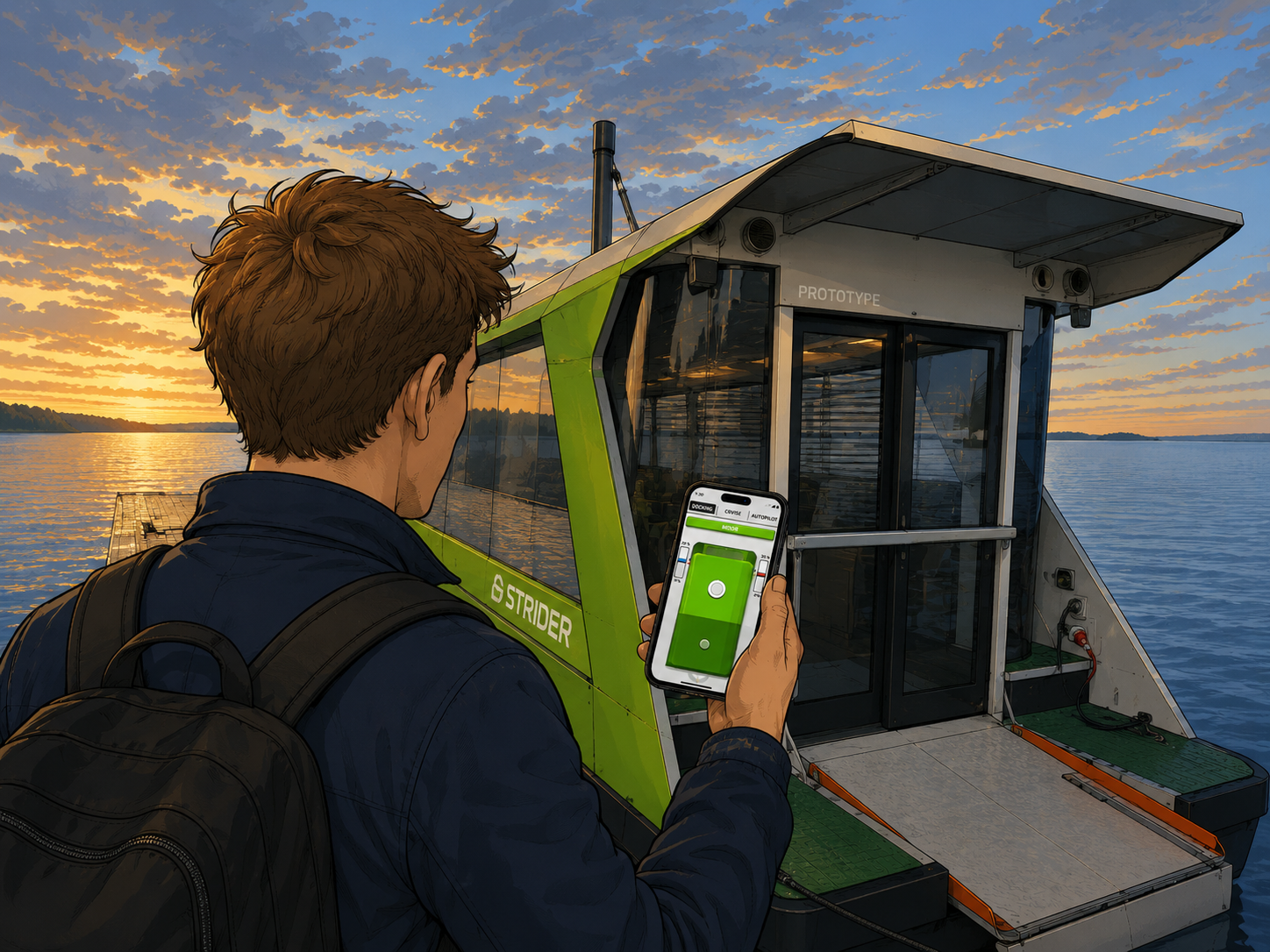
Person starting the ferry via their app
Celia 1●Battery 44% · 4 h 36 min
Step 2I check the battery level on my app.
4
Person boarding Celia 1
Unlock & step aboard
Step 3I unlock the doors and step aboard the ferry. I switch on the main power and turn on the navigation lights and lighting if needed.
5
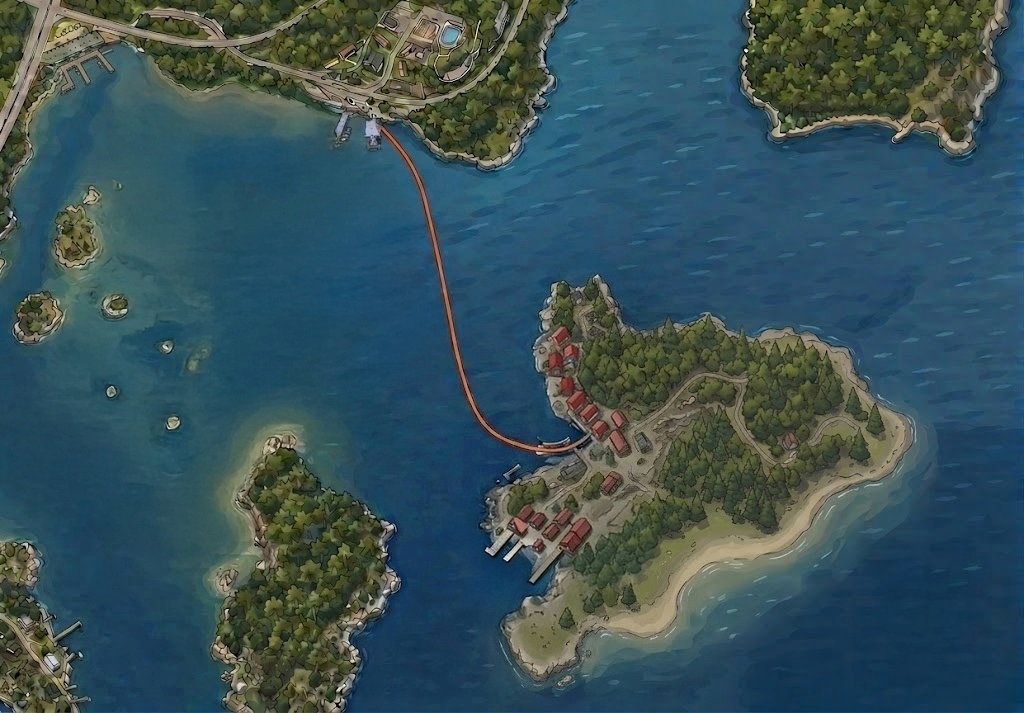
Map of the route between mainland and island
CAST OFF
ROUTE
STARTED!
Step 4I press CAST OFF. The autopilot route starts. I'm responsible for keeping watch and can steer around obstacles via the app.
6
Person steering Cstrider via app on board
Autopilot●On route
I'm keeping watch!
Step 5On board I keep watch. Via the app or the boat's control system I can steer around obstacles, turn on lights, fans and navigation lights etc if needed.
7
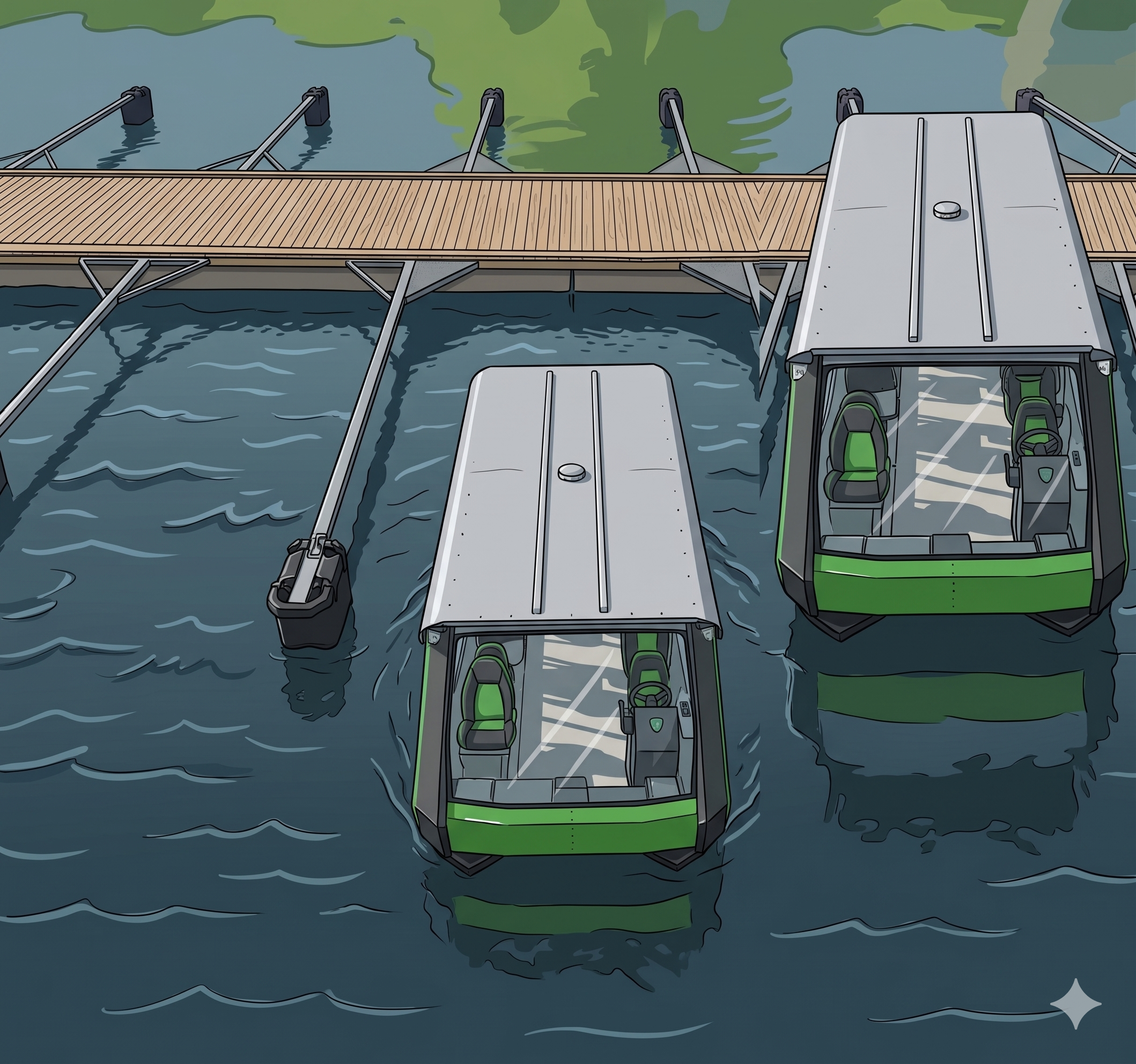
Cstrider ferries docking, seen from above
AUTO-
DOCK!
Celia 1●Reverse · precision docking
Step 6Arrived at my archipelago island! Time to dock. The ferry turns around automatically, backs in, and auto-moors at the dock.
8
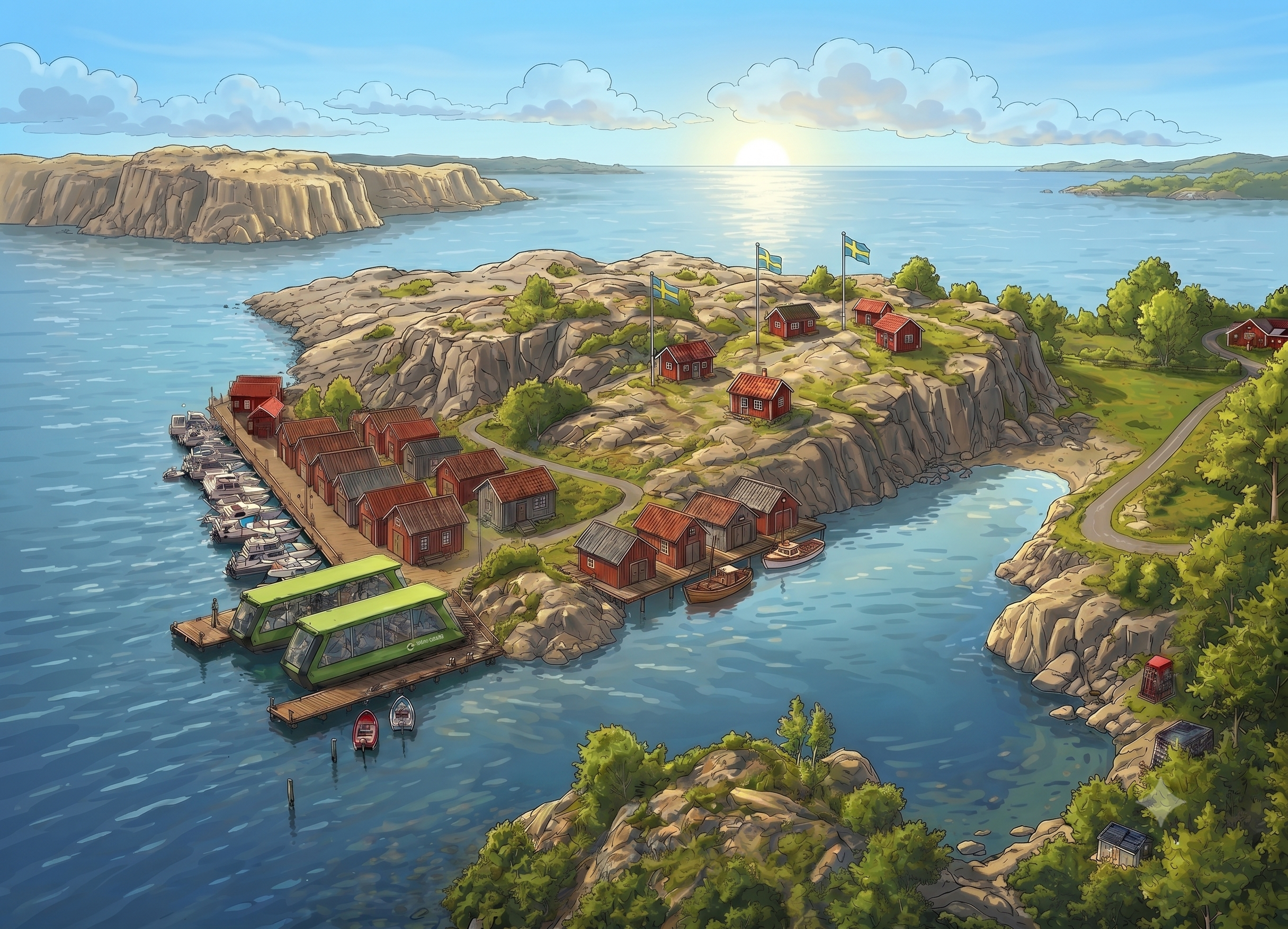
Two Cstrider ferries moored at the archipelago island in the evening
Both ferries home ✓
Status●Charging · power off
GoalArrived! I switch off the power, turn on charging, and head to the cabin.
Green = autopilot / status OK
Orange = manual step / focus
Photos: Cstrider · Comic-style illustrations

Scenario Two

This is an example of how a virtual bridge can revolutionize public transport. Five small electric ferries turn a 20-minute detour into a 4-minute crossing, with a departure every two minutes, at a fraction of the cost and time it takes to build a bridge.
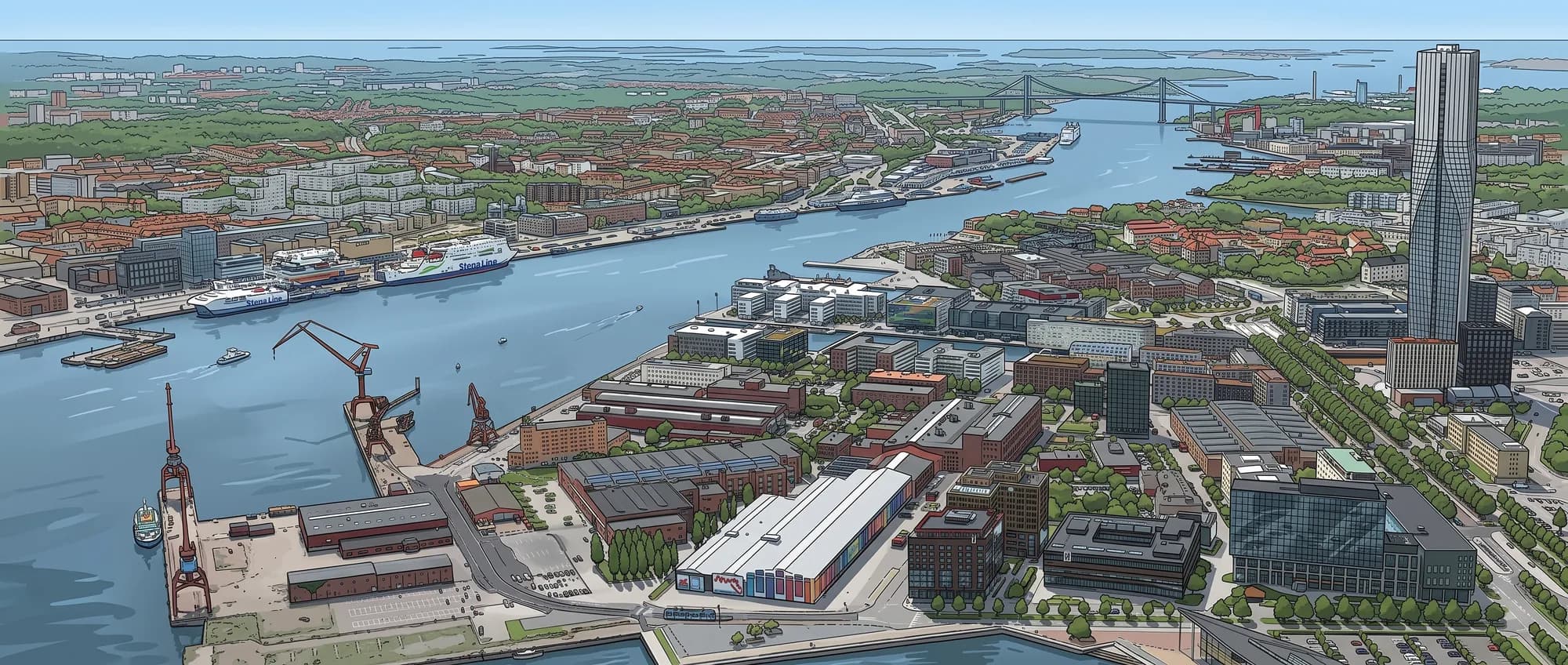

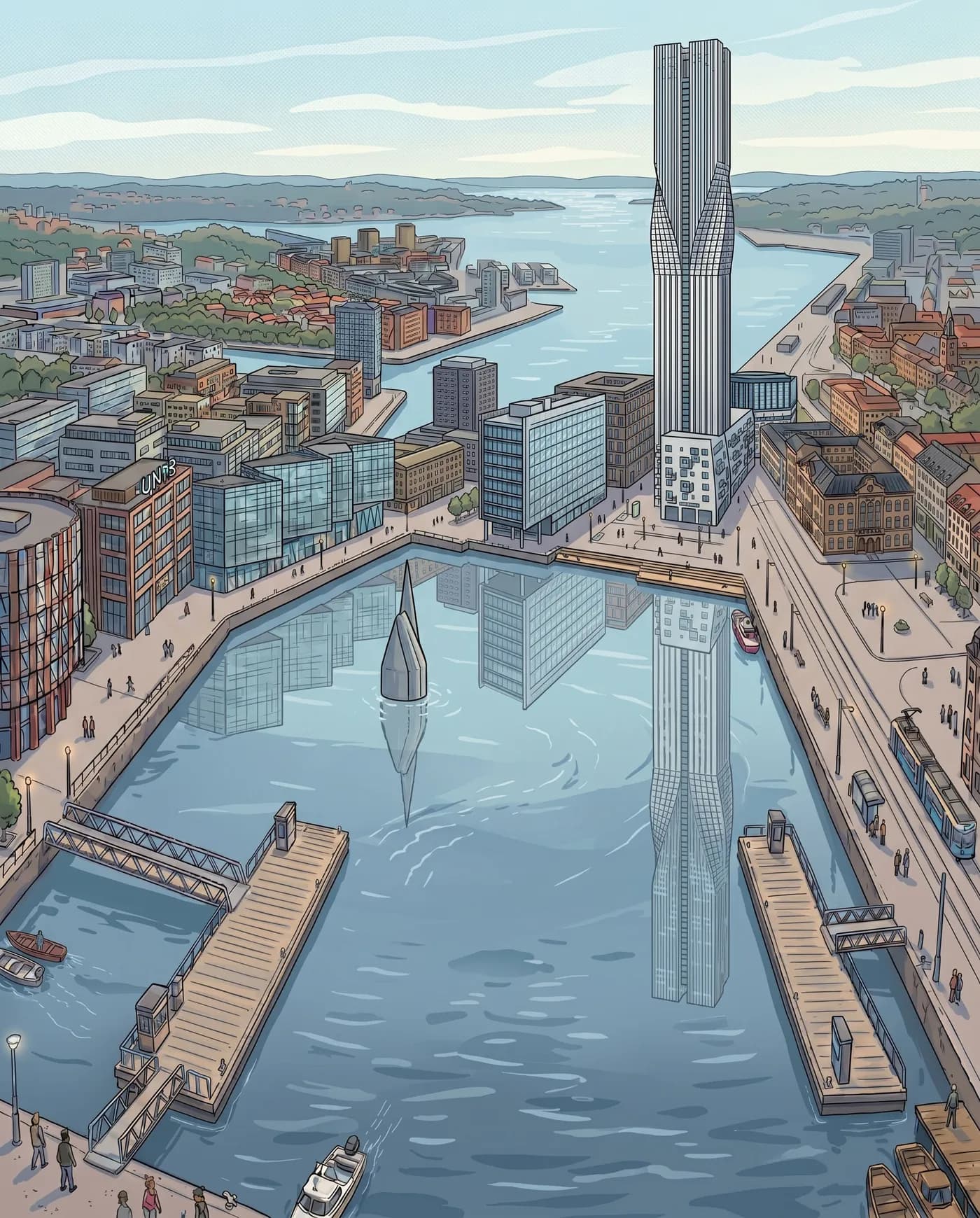
Göta älv between Lindholmen and Järntorget in central Gothenburg
User Scenarios · Storyboard

The Virtual Bridge across the river

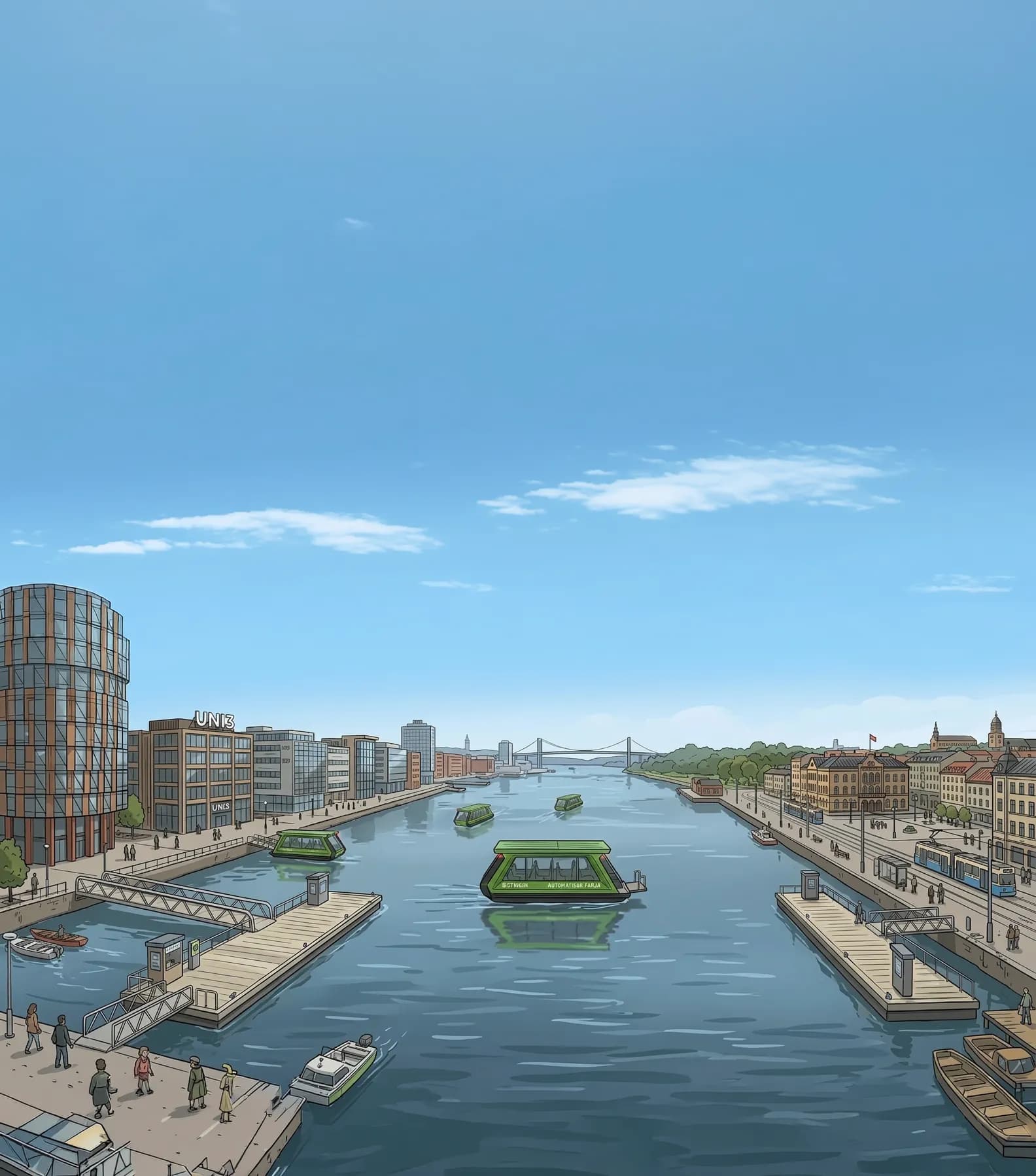
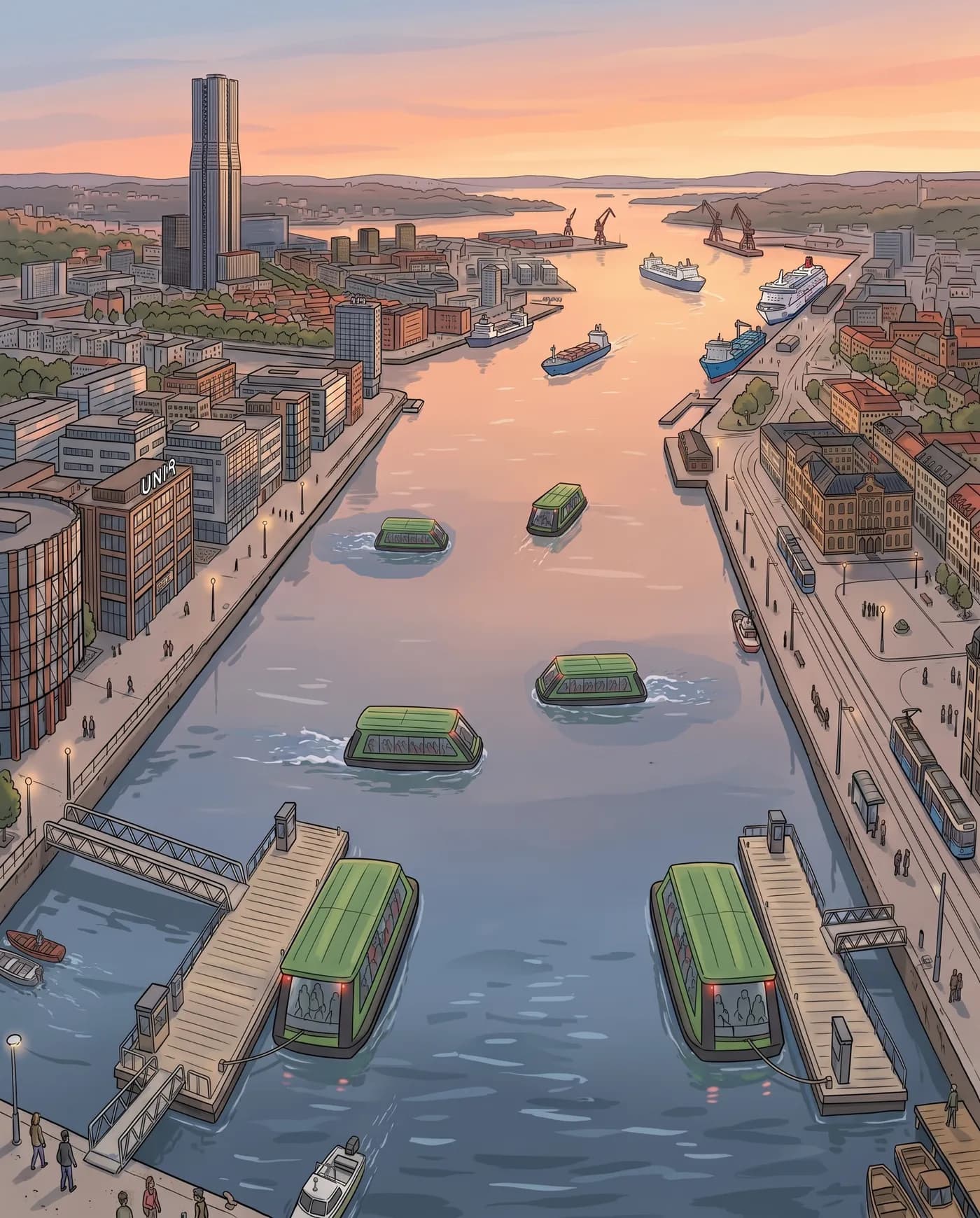
Five electric Cstrider ferries shuttle non-stop between Lindholmen and Järntorget across Göta älv — a departure every two minutes, on demand. A bridge, without building a bridge.
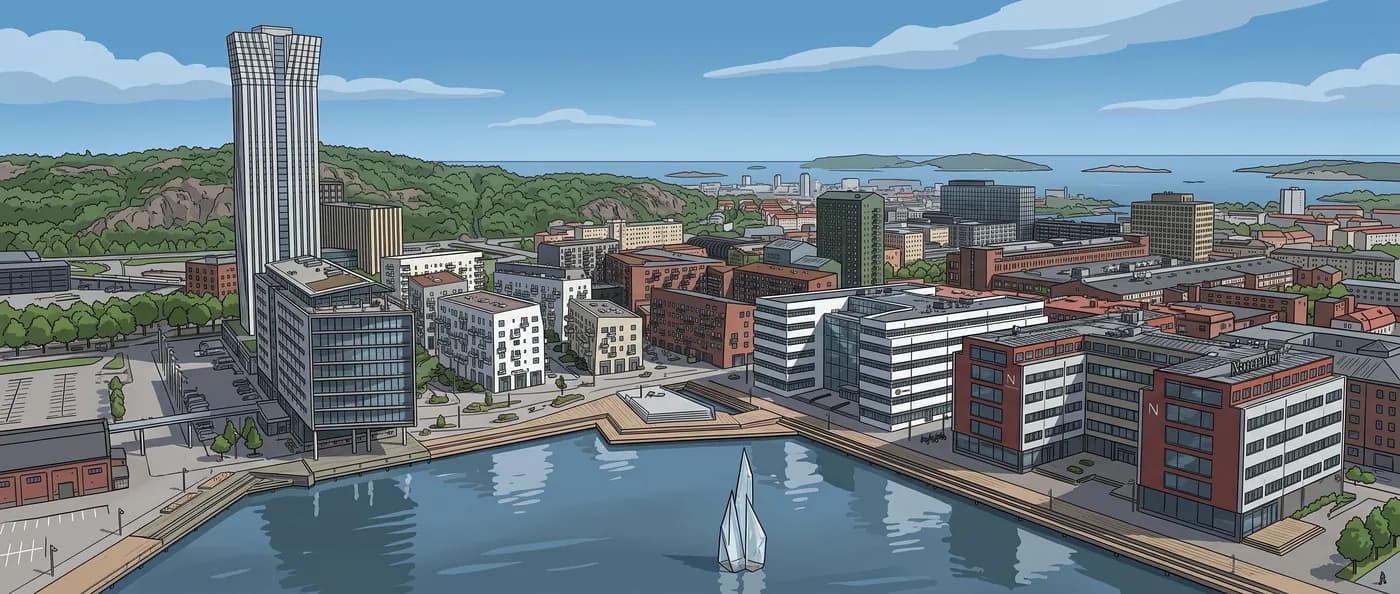
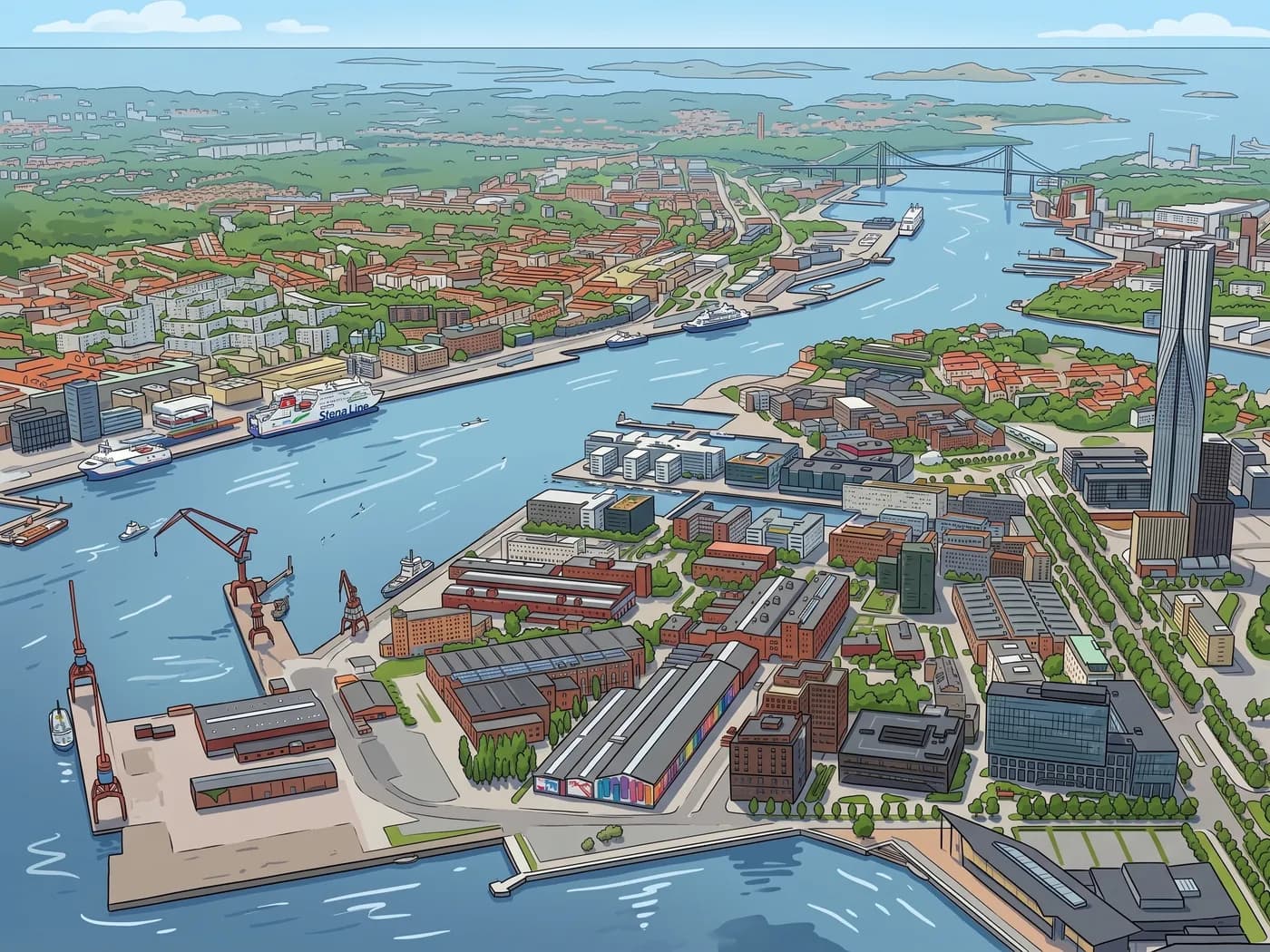
Virtual BridgeDeparture every 2 minOn demand
02
Virtual Bridge · Urban commuting
Lindholmen ⇄ Järntorget
Göta älv · Gothenburg · 5 ferries and 2 floating docks · a departure every 2 minutes or on demand.
Commuter by the river wanting to cross to Lindholmen
1
I need to get to Lindholmen — now.
StartI'm standing at Järntorget by the river. My work is straight across at Lindholmen — but the water is in the way.
Aerial view of Göta älv showing the long way around by bridge and road
2
+20
MIN!
TodayTram · bus · bike · car
The problemToday I go the long way around — tram over Götaälvbron, or bus and bike. It costs me roughly 20 extra minutes each way. A bridge is expensive and takes years to build.
Five green Cstrider ferries crossing Göta älv between Lindholmen and Järntorget
3
Virtual Bridge5 ferries · every 2 min
The smart solutionCstrider's Virtual Bridge: five electric ferries shuttle non-stop between two floating docks. A bridge — without building a bridge.
Commuter on the quay looking across the river as a ferry approaches from the far side
4
ON
DEMAND
On demand serviceNo need for a timetable. With 5 ferries operating there will always be a ferry on the dock or just docking so I can board when I want.
A Cstrider ferry gliding up to the floating dock as passengers wait
5
AutopilotDocking · every 2 min
Arrives in 2 minWithin about two minutes a ferry glides up to the floating dock — smooth, quiet, and precise.
Passengers walking and rolling bikes straight aboard from a level floating dock
6
Just step on!
SimplicityI walk straight on — or roll my bike or pram aboard. No stairs, no ramps, no fuss.
Cstrider ferries crossing the river at dusk with the Gothenburg skyline behind
7
Crossing4 min
The crossingThe trip across takes about 4 minutes, gliding past the city skyline. A relaxing, comfortable and scenic way to commute.
Arrival at Lindholmen waterfront by Karlatornet
8
ResultLindholmen · door to door
20 minutes saved ✓
GoalI step off at Lindholmen. Versus car, bike, or bus I've saved about 20 minutes — every single day.
Green = autopilot / OnDemand / status OK
Orange = key benefit / focus
City photos: Gothenburg · Illustrations in comic style
Cstrider · Innovation on Water — The Virtual Bridge, Lindholmen–Järntorget

Water is the new way

Whether you're a municipality, transport operator, or investor, let's reconnect your city. Silently and sustainably.

Pricing · Team · Press · FAQ: all on the full site